

The short version: Start with strawberries. The reason is structure, not flavor: an open-celled, high-water fruit sliced to a uniform thickness gives water a short, unobstructed path out, so the batch tolerates a rough guess at slice size and still finishes. Run strawberries, then apples, then herbs, then blanched potatoes, then cooked beans, and each batch adds exactly one new demand: a browning dip, a no-rehydration food, a cook-first step, a texture endpoint.
getting started
Your first five batches, in order.
What makes a batch forgiving
University of Minnesota Extension puts the number on it: "Raw foods contain a large amount of water—80 to 95 percent" [5]. That water is what the machine is built to remove. Everything else in the food either helps it leave or gets in the way, and only three variables show up across the published guidance.
| Factor | What the sources say it does to the cycle | What it does to the result |
|---|---|---|
| Water | The primary driver of cycle length in every source. Harvest Right advises pre-freezing high-moisture foods to shorten the freeze cycle [10] | Sublimation is the mechanism; UC ANR describes the process as retaining original texture, flavor and nutrients once reconstituted [8] |
| Sugar | Documented to lengthen cycles. Utah State University Extension: "Fresh pineapple takes between 48 to 52 hours" against typical 20-40 hour batches [4]; UC ANR publishes the same 48-52 hour figure for very dense and high-sugar foods [8] | Harvest Right says high-sugar foods can become a sticky, difficult-to-handle mess during the process and cannot be reconstituted properly [15] |
| Fat | No source ties fat to a published cycle-time figure. The published advice is to remove it rather than plan around it [12] | Fat is not removed by sublimation at all. Harvest Right: "Freeze drying removes water, but oil remains" [15], and foods with higher fat content generally have shorter storage lives [14] |
No source found ranks these three against each other for disruptiveness, so this guide does not either. What the table supports is narrower and more useful: a first batch should be mostly water, low in fat, and not built around concentrated sugar.
One thing that does not vary with the food: "Freeze-drying does not kill bacteria. Instead, it preserves microorganisms in a dormant state," says Jose Brandao of Utah State University Extension [3]. Every batch below starts from food that is already safe to eat.
Batch one — strawberries
- Why first. Open structure and high water content, with no skin barrier over most of the cut surface and no fat to speak of. Harvest Right's harvest guide has you slice larger berries and inspect them before loading, with no pretreatment step [16].
- Thickness. No berry-specific figure is published by any manufacturer or extension service. The general extension guidance is 1/4 to 1/2 inch, 6-13 mm [2]. Small berries go in whole.
- Loading. Single layer [5]. Harvest Right says pieces can touch, so you do not need space between every piece, and gives about three-quarters of the tray height as a general fill guide [12]; University of Arizona Extension puts it as food not higher than the lip of the tray [9].
- What done looks like. Break open several of the largest pieces from different trays: "There should be no moisture, cold spots, or areas that feel soft because moisture remains" [13]. A cool center is the usual tell.
- Published cycle range. Blue Alpine publishes 14-24 hours on a fruit or delicate setting [18]. Harvest Right's general home range is 13-35 hours [10]. In a lab freeze dryer, not a consumer unit, strawberry slices took 49 hours at under 40°C and 0.055 mbar to reach 9.49% final moisture, with 64.90% rehydration capacity against 53.11% for hot air [21].
Batch two — apples
- Why second. Same forgiving structure, one added demand: apples brown. This is the batch where pretreatment enters. Harvest Right claims freeze-drying "does not shrink or toughen the apples, but retains the aroma, flavor, color, shape and nutritional content" [17]. The color half of that depends on what you do before loading.
- Thickness. Cut into uniform pieces [16]; the general 1/4 to 1/2 inch guidance applies [2], and Harvest Right adds that no piece should be thicker than the tray height [11].
- Loading. Single layer, cut faces up where practical. Same three-quarter tray guidance [12].
- Pretreatment. "Light-colored fruit like apples, bananas, and pears can be pretreated to prevent browning once it's cut," per University of Maine Extension [6]. University of Minnesota specifies one teaspoon ascorbic acid to one gallon of cool water for produce that cannot be blanched [5]; UC ANR names ascorbic acid or lemon juice, listing apples first [8].
- What done looks like. Same break test [13]; University of Minnesota's version is to cut each piece in half and inspect for dark spots in the middle, which indicate moisture [5].
- Published cycle range. Blue Alpine's generic fruit recipe is 1095 mTorr, 115°F, 24 hours [18]; Harvest Right's general 13-35 hour range covers it [10].
Batch three — herbs
- Why third. It teaches the other end of the process. Herbs need no blanching, no dip, and no rehydration at all. Iowa State: "There is no need to rehydrate herbs, onions, or bell peppers as they can be added directly to foods" [7]. A short, low-stakes batch after two fruit runs.
- Thickness. Not applicable, and deliberately so. Harvest Right's instruction is to "store herbs whole when possible and crush them shortly before use for stronger aroma and flavor" [16]. The leaf stays intact through the process and the storage.
- Loading. Single layer, loose. Herbs are light enough that the tray-height guidance [12] stops being the constraint; the tray lip rule still applies [9].
- What done looks like. Utah State University Extension and UC ANR give the endpoint qualitatively rather than numerically: dried to a crisp or breakable texture [4]. Leaves should crumble rather than fold.
- Published cycle range. No manufacturer or extension source publishes an hour figure for herbs, and none publishes a comparison of volatile-oil or color retention against conventional dehydrating.
Batch four — potatoes, blanched or cooked
- Why fourth. First batch that requires work before the machine. Raw potatoes are cautioned against across extension sources; blanching or cooking is the published fix for discoloration [1, 7, 8].
- Thickness. No potato-specific figure from an extension source. Generic piece guidance is a half inch or under [11]. One secondary guide gives blanch times of about 1 minute for shredded or thin-sliced and up to 3 minutes for large pieces [23]; no extension source publishes potato-specific minutes.
- Loading. Single layer [5], not above the tray lip [9]. The same secondary guide reports about 3 lb of potatoes per tray as a load-density note [23].
- What done looks like. Break test on the thickest pieces from different trays [13]; no dark centers [5]. This is a good batch to add a scale: Stay Fresh publishes weighing each tray at cycle completion and again after extended drying, and "If the weight remains consistent, this indicates that the food is adequately dry" [20].
- Published cycle range. A manufacturer-tested figure reproduced by a retailer: 9 hours freeze plus 7 hours dry, 30-32 hours total, 125°F shelf and -40°F condenser [24]. Rehydration, secondary only: warm water for 10-15 minutes, or straight into soups and stews with extra liquid [23].
Batch five — cooked beans
- Why fifth. It carries the clearest published mechanism of the five, and it is the batch where the endpoint is a texture rather than a look. Utah State University Extension states it plainly: "Cooking or soaking improves texture after rehydration and helps prevent hard seed coats" [1].
- Thickness. Not published; beans are a wet mass rather than a sliced piece. Depth is the variable that matters: keep the layer shallow and under the tray lip [9, 12].
- Loading. Cook and cool to room temperature before loading [25]. A liner helps: Harvest Right says silicone mats or parchment make cleanup easier and are especially helpful with liquids and sticky foods [12], though no manufacturer publishes any effect of liners on cycle time.
- What done looks like. For refried beans, one secondary guide describes the finished texture as dry, warm, hard and flakey, with soft or cool spots needing 2-3 more hours [25]. That is the same signal as the break test [13], stated as feel rather than fracture.
- Published cycle range. Up to 33 hours for refried beans [25]. No figure is published anywhere for whole cooked beans. Rehydration for refried beans is 2 parts dried to 1 part water, hot water 3-5 minutes or cold water 5-10 minutes [25]; no ratio exists for whole beans.
The five batches at a glance
| # | Batch | New demand it adds | Prep | Published cycle | Done signal |
|---|---|---|---|---|---|
| 1 | Strawberries | None — baseline | Slice larger berries; 1/4-1/2 in general guidance [2, 16] | 14-24 h [18]; 13-35 h general [10] | Break test, no cold or soft center [13] |
| 2 | Apples | A browning pretreatment | Uniform pieces; ascorbic acid or lemon juice dip [5, 6, 8] | ~24 h [18] | No dark spots at the cut center [5] |
| 3 | Herbs | A food you never rehydrate | Whole, no blanching; crush at point of use [7, 16] | None published | Crisp or breakable [4] |
| 4 | Potatoes | A cook-or-blanch step | Blanch or cook first; pieces under 1/2 in [1, 7, 8, 11] | 30-32 h total [24] | Break test plus stable tray weight [13, 20] |
| 5 | Cooked beans | A texture endpoint, not a visual one | Cook or soak, cool to room temperature [1, 25] | Up to 33 h (refried) [25] | Dry, warm, hard, flakey; no cool spots [25] |
Treat every hour figure above as conditional. None of the sources control for machine size, load weight, tray depth or starting temperature, and Harvest Right notes that sugar and fat content both affect how long a batch takes [12].
What to avoid for now — fat and sugar
Both are worth deferring past batch five, for different published reasons.
Fat does not leave. "Freeze drying removes water, but oil remains" [15]. University of Minnesota Extension says the process works well for proteins but not for foods high in fat [5]. Utah State University Extension's example is blunt: "High-fat foods such as mayonnaise do not freeze-dry well and can become unsafe" [3], and high fat content increases the risk of rancidity during storage [1]. Harvest Right ties it to the storage claim directly: foods with higher fat generally have shorter storage lives [14]. There is no published fat percentage threshold from any source at any tier, so the guidance is qualitative: leaner is better, and visible fat is worth trimming.
Sugar lengthens the cycle and changes the surface. Iowa State groups it with the class it belongs to: "High-fat foods, high-sugar foods, and baked goods (breads, cakes, muffins) do not freeze dry successfully" [7]. The extension time figures are the concrete part: 48 to 52 hours for pineapple and for very dense or high-sugar foods, against 20-40 hour norms [4, 8]. Note the tension worth knowing before you read further: Utah State says fruits high in sugar "may be flexible, but not sticky" [4], while Harvest Right's blanket language about high-sugar foods is a sticky mess that cannot be reconstituted properly [15]. Whole fruit and syrup are not the same problem, and no source resolves the two statements against each other.
When these five batches come out and you package them, the sealing side matters as much as the drying side. Our Starter Set (50 mylar bags, 50 matched oxygen absorbers, and the sealer that closes them) covers the packaging step for a first run of batches. Sold by Sublime Pantry.
What we could not source
- No berry-specific slice thickness exists. No manufacturer or extension source publishes a thickness for strawberries or any berry. The 1/4 to 1/2 inch figure used above is general produce guidance [2].
- Fresh-to-dried yield is essentially unpublished. No extension service publishes a yield figure for any food. For the five batches here, the only figure found anywhere is a commercial supplier's roughly 8-10 kg fresh to 1 kg dried for strawberries, varying by spec [22]. Nothing for apples, herbs, potatoes or beans.
- No residual-moisture target is published. Every figure found is framed as a percentage of moisture removed, never as a percentage remaining. The endpoints published are qualitative: crisp or breakable [4], plus the break test [13] and the weight method [20].
- No fat-percentage ceiling is published by anyone, for any food, at any source tier.
- No source ranks foods by suitability, and none ranks fat, sugar and water against each other. The order in this guide is built from the published mechanisms above, not from a source that ranks them.
- No potato-specific blanch time comes from an extension service. The 1-3 minute figures are from a single secondary guide [23].
- No rehydration ratio exists for whole cooked beans. The 2:1 figure is published for refried beans only [25].
- The National Center for Home Food Preservation publishes no home freeze-drying guidance. Its freezing and drying pages cover conventional methods only, and its freeze-drying educator page is subscriber-gated. The extension authority in this guide therefore comes from Utah State, UC ANR, Minnesota, Iowa State, Maine and Arizona instead.
Next
- The complete batch workflow — every stage in full, once the first five are behind you.
- When a batch comes out chewy — the failure most of these early runs risk.
- What freeze-drying does to candy — a common early batch, and what it needs.
Tools mentioned in this guide
- Sold by Sublime Pantry
Starter Set — 50 Bags, 50 Absorbers, Sealer
Everything needed to seal your first fifty bags: 50 bags, 50 matched absorbers, and the sealer that closes them.
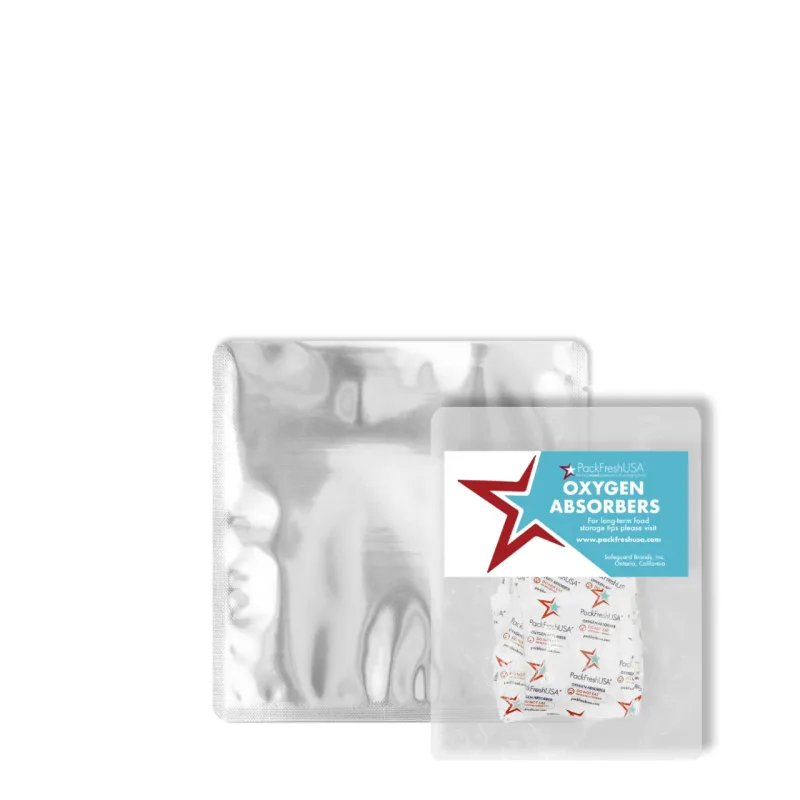
Sold by Sublime Pantry: Starter Set — 50 Bags, 50 Absorbers, Sealer. Sublime Pantry has no affiliate relationships, sponsorships, or paid placements as of publication. We sell packaging; where a product we sell appears, it is labeled.
Common questions
Why not start with blueberries?
Skin gets in the way. Blue Alpine's own support forum says "Any food with a skin will have a harder time freeze drying. Blueberries are especially difficult," and puts pureeing ahead of halving, which is ahead of piercing with a toothpick [19]. Harvest Right says to pierce or cut fruits with skins so moisture can escape [11]; University of Arizona Extension gives a different reason for the same step: piercing keeps them from bursting [9]. Two published reasons, one unresolved question. Not a first batch.
Do I have to pre-freeze?
It is published as a time-saver, not a requirement, and it matters most for wet loads. Harvest Right's FAQ says to pre-freeze high-moisture foods for up to 48 hours before loading to shorten the freeze cycle [10]; its prep page specifies at least 24 hours for milk, eggs and soups [11]. University of Minnesota Extension says freezing prepared food in a household freezer for 48 hours before filling trays may also speed the process [5].
How much food goes in one batch?
The two published figures disagree, so treat load weight as a range rather than a number. Harvest Right's current FAQ gives 6-10 lb (Small), 10-15 lb (Medium), 18-27 lb (Large) and 40-50 lb (X-Large) of fresh food per batch [10]. Utah State University Extension's 2019 buying guide gives materially lower figures for the same sizes: 4-7 lb, 7-10 lb and 12-16 lb [4]. Neither publication explains the gap.
Does freeze-drying make questionable food safe?
No. This is the most consistent statement in the extension literature. "Freeze-drying does not kill bacteria. Instead, it preserves microorganisms in a dormant state," per Jose Brandao of Utah State University Extension [3]. University of Maine Extension states that freeze drying does not destroy harmful bacteria that can cause foodborne illness [6]. Start with food you would eat today.
How long will these five batches actually keep?
Manufacturer and extension figures do not agree, and the honest answer is a range with conditions. Harvest Right says many properly packaged freeze-dried foods can last up to 25 years or longer under ideal conditions, explicitly conditioned on fat content [14]. Utah State University Extension states "No real data exists on the shelf-life of home freeze-dried products" [4]; UC ANR says consuming home freeze-dried products is not recommended beyond 5-10 years after processing [8]; Iowa State says there is no verification that food will last 25 years at this point [7].
Sources
- Can I Freeze-Dry That? A Practical Guide to Safe and Effective Freeze-Drying — Utah State University Extension primary · accessed 2026-09-06
- Freeze Drying (Preserve the Harvest) — Utah State University Extension primary · accessed 2026-09-06
- Ask an Expert — Freeze-Drying Food at Home: Tips for Safe, Successful Results — Utah State University primary · accessed 2026-09-06
- Buying a Home Freeze-Dryer: What to Know Before You Go (April 2019) — Utah State University Extension primary · accessed 2026-09-06
- Preserving food at home: Freeze-drying — University of Minnesota Extension primary · accessed 2026-09-06
- Tips for Freeze Drying at Home — University of Maine Cooperative Extension primary · accessed 2026-09-06
- Preserving by Home Freeze Drying (AnswerLine) — Iowa State University Extension and Outreach primary · accessed 2026-09-06
- Freeze Drying For Home Use (fact sheet, PDF) — UC ANR / UC Master Food Preserver Program primary · accessed 2026-09-06
- Preparing and Storing Your Freeze Dried Products for Best Use (az2097b, Feb 2025) — University of Arizona Cooperative Extension primary · accessed 2026-09-06
- Harvest Right Home Freeze Dryers — FAQs — Harvest Right primary · accessed 2026-09-06
- What's the best way to prepare food for freeze drying? — Harvest Right primary · accessed 2026-09-06
- How to Freeze Dry Like a Pro: 25 Tips for Better Results — Harvest Right primary · accessed 2026-09-06
- How Do I Know When My Freeze-Dried Food Is Completely Dry? — Harvest Right primary · accessed 2026-09-06
- Storing Freeze Dried Food — Harvest Right primary · accessed 2026-09-06
- What Foods Can You Freeze Dry? A Complete Guide — Harvest Right primary · accessed 2026-09-06
- How to Freeze Dry Your Garden Harvest — Harvest Right primary · accessed 2026-09-06
- Freeze Drying Apples — Harvest Right primary · accessed 2026-09-06
- How Do You Freeze Dry Fruits, Berries, and Melons? — Blue Alpine primary · accessed 2026-09-06
- Blueberries and Other Foods With Skins (staff post, 2024-11-22) — Blue Alpine official support forum primary · accessed 2026-09-06
- Master Freeze Drying: Check Doneness by Weight Change — Stay Fresh primary · accessed 2026-09-06
- Antunes et al. (2025), Impact of Different Dehydration Methods on Drying Efficiency, Nutritional and Physico-Chemical Quality of Strawberries Slices, Processes 13(7):2065 — MDPI Processes primary · accessed 2026-09-06
- Freeze-Dried Strawberry Fresh-to-Dry Ratio for Buyers — FruitBuys (commercial supplier) secondary · accessed 2026-09-06
- Freeze Drying Potatoes: A Complete Guide — Montana Homestead Harvest secondary · accessed 2026-09-06
- Harvest Right Freeze Drying Time Chart — Trimleaf (retailer, reproducing manufacturer times) secondary · accessed 2026-09-06
- How To Freeze-Dry Refried Beans — Freeze Dried Guide secondary · accessed 2026-09-06