

The short version: chewy is a moisture symptom, not a texture preference. The batch most likely is not dry. Your hands are not a reliable instrument for this, because, as Harvest Right puts it, “the outside of a piece of food can feel completely dry even when moisture remains in the center” [4]. Break the thickest pieces open and read the center, then confirm with tray weight: Stay Fresh's published endpoint is that “if the weight remains consistent, this indicates that the food is adequately dry,” with most scale error inside 1 gram [6].
Endpoint and dryness
Why your batch came out chewy
Food safety note: This article is educational, not professional food-safety, legal, or medical advice. Freeze-drying does not kill pathogens, and cottage food rules vary by state. Confirm requirements with your state or local food authority before selling anything.
The diagnostic
Two published checks exist. Neither is a lab measurement, and they answer slightly different questions.
The cut or break test is Harvest Right's: break pieces open and check the center, where “there should be no moisture, cold spots, or areas that feel soft because moisture remains” [4]. Food should not feel moist, feel unusually soft, feel cold in the center, or look darker than the surrounding dry food [4]. The sampling instruction matters as much as the test: test several of the largest or thickest pieces, from different trays [4]. University of Minnesota Extension publishes the same check in a shorter form: “Cut each piece in half. Inspect for any dark spots in the middle of the food. A dark spot would indicate moisture” [5].
The weight test is Stay Fresh's, and it is the only weight-based endpoint found in manufacturer documentation. Weigh each tray at auto-cycle completion, run extended dry time, and weigh again; stable weight is the endpoint, and the manufacturer's stated target is 98–99 percent of moisture removed, for food it describes as intended to last 25 years or more [6]. The worked example is a tray of oranges that read 249 g at cycle end and 242 g after more drying; a 7 g loss meant the batch was not done [6]. UC ANR describes weighing trays before and after for a different purpose entirely: calculating how much water a dish needs at reconstitution, not deciding dryness [14].
| Check | What it reads | Published wording | Source |
|---|---|---|---|
| Cut / break test | Moisture, cold, softness, or darkening at the center of the thickest pieces | “Break them open and check the center. There should be no moisture, cold spots, or areas that feel soft.” | [4] |
| Cut-in-half inspection | A dark spot in the middle | “Cut each piece in half. Inspect for any dark spots in the middle of the food.” | [5] |
| Tray weight, repeated | Whether mass is still leaving the tray | “If the weight remains consistent, this indicates that the food is adequately dry.” Scale error within 1 gram | [6] |
| Moisture meter | A secondary reading before packaging | “A moisture meter can provide another way to check food before packaging.” | [4] |
| Texture endpoint | A qualitative target, not a measurement | Dried to a “crisp” or “breakable” texture; fruit “may be flexible, but not sticky” | [3] |
Documented causes, grouped by how easily you can check them
These are grouped by what it costs you to check them, not by how often they happen. No source at any tier publishes a ranking of causes, so none is offered here.
Things you can check by looking at the load you already ran. Piece thickness has a published range: Utah State Extension gives a general 1/4 to 1/2 inch guide [1], Harvest Right says to cut food so pieces are no thicker than the tray height and treats about three-quarters of tray height as a loading guide [8][7], and Arizona Extension states food should not sit higher than the lip of the tray [9]. Layering is where the manufacturer guidance contradicts itself: one Harvest Right page says “pieces can touch, so you don't need to leave space between every piece” [7], while another instructs a single layer per tray, allowing only corn, beans and peas to be slightly layered [8]. Skins block moisture. Blue Alpine's support forum states plainly that “any food with a skin will have a harder time freeze drying,” naming blueberries as especially difficult [13], Harvest Right says to pierce or cut fruits with skins to help moisture escape [8], and Arizona Extension gives a different reason for the same act: to keep the fruit from bursting [9]. Batch weight is checkable, but the published limits disagree. Harvest Right's FAQ gives 6–10 lb small, 10–15 lb medium, 18–27 lb large and 40–50 lb extra-large [10]; Utah State's 2019 figures are 4–7, 7–10 and 12–16 lb [3]; Blue Alpine gives roughly 8–16 lb medium and 14–24 lb large [11].
Things you can check from what the food was. Fat is not removed by the process: “freeze drying removes water, but oil remains,” and foods that are nearly pure fat “don't freeze dry well on their own” [12]. Utah State ties that directly to the symptom: “high fat content prevents adequate drying, increasing the risk of rancidity and pathogen survival” [1]. University of Minnesota states that foods high in fat or oil may not freeze-dry well [5]. Blue Alpine lists very oil-based foods such as peanut butter as an exception [11]. Sugar lengthens cycles rather than blocking them: Harvest Right notes sugar and fat content affect how long a batch takes [7] and recommends extending both freeze and dry phases by 12 hours for high-sugar foods [7], while Utah State and UC ANR both publish 48 to 52 hours for fresh pineapple against typical 20–40 hour batches [3][14]. At the honey and syrup end, Harvest Right describes high-sugar foods becoming “a sticky, difficult-to-handle mess” [12]. Water content and pre-freezing are the other half: Harvest Right advises pre-freezing high-moisture foods for up to 48 hours to shorten the freeze cycle [10] and at least 24 hours for milk, eggs and soups [8], and University of Minnesota states that 48 hours in a household freezer before filling trays may speed the process [5]. Baked goods are a documented class exclusion, since Iowa State Extension states that high-fat foods, high-sugar foods and baked goods including breads, cakes and muffins “do not freeze dry successfully” [33].
Things only a rerun or a measurement settles. Whether the cycle simply ended early is one of them. No source publishes a residual-moisture target to dry to; the endpoint in the published literature is qualitative (crisp or breakable [3]) or comparative (weight that stops changing [6]). And whether the food was ever dry at all is a different question from whether it stayed dry: Virginia Tech's small-scale freeze dryer study found larger 14 mm dice held higher water activity than 7 mm dice, and that water activity rose after 24 hours of storage for every commodity tested except apples, with glass containers less variable than plastic bags [30].
| Cause | How to confirm | What to change | Source |
|---|---|---|---|
| Pieces too thick | Measure a test piece; break it and read the center | Cut to the published 1/4–1/2 in range; keep pieces no thicker than tray height | [1][8][4] |
| Tray loaded too deep | Compare load height to the tray lip | Keep food at or below the lip; about three-quarters of tray height as a guide | [9][7] |
| Food layered rather than single-layer | Look at the run photo or the tray as loaded | Guidance conflicts: one page permits pieces touching, another instructs a single layer with corn, beans and peas the only exception | [7][8] |
| Intact skins on fruit | Uncut blueberries, grapes or cranberries in the load | Pierce, halve or purée; Blue Alpine's stated order of preference is purée, then halve or quarter, then pierce | [13][8][9] |
| Batch weight above capacity | Weigh the fresh load before the next run | Published capacities disagree by machine size and by publisher; pick one and record which | [10][3][11] |
| High fat content | Oily residue on the tray or the piece; the food was fatty going in | Fat is not removed by sublimation; trim, drain, or choose a leaner form | [12][1][5][11] |
| High sugar content | Tacky surface; the batch hit auto-cycle at a normal time | Extend freeze and dry phases; expect 48–52 hours for dense, high-sugar items such as fresh pineapple | [7][3][14][12] |
| Not pre-frozen | High-moisture load went in unfrozen | Pre-freeze 24–48 hours, especially milk, eggs, soups and stews | [10][8][5] |
| Cycle ended before the food was dry | Cut test on the thickest pieces; tray weight still dropping | Run extended dry until weight stops moving | [4][6] |
| Moisture regained after the cycle | Food was crisp at unload and chewy later | Seal promptly into an airtight container; water activity rose after 24 hours of storage in the one extension study found, and glass was less variable than plastic bags | [30][32][31] |
What to do with the batch
Handling history comes before inspection, because the process does not sterilize anything. Utah State Extension states it directly: “Freeze-drying does not kill bacteria. Instead, it preserves microorganisms in a dormant state” [2], and organisms can reactivate when moisture is reintroduced, including during improper storage [2][1]. So the first questions are about the food's history, not its texture:
- How long was it out, and at what temperature? USDA FSIS puts the disposition rule on elapsed time rather than condition: throw away perishable foods left at room temperature more than 2 hours, or 1 hour above 90 °F [22].
- What went in? Utah State states that food traditionally cooked before eating must also be cooked before eating as a freeze-dried food, including raw meats, raw seafood, raw eggs, and foods containing them [3].
- How will it be rehydrated? Harvest Right instructs that raw freeze-dried meat must always be rehydrated in cold water in the refrigerator, never on the counter or in warm water [23].
- Was it dried and then held warm? FSIS notes that after drying, bacteria “become much more heat resistant,” meaning the food looks unchanged while the survivors are harder to kill [26].
Only after that does the texture question become answerable. Re-drying is permitted, conditionally, by six independent extension services. NCHFP, Clemson, Colorado State, Iowa State, PNW and Virginia Tech all publish some version of returning dried food to the dryer and repackaging it [15][16][17][18][19][20]. NCHFP's wording is the clearest: “Foods affected by moisture, but not spoiled, should be used immediately or redried and repackaged” [15]. Every one of those permissions is gated on the absence of mold, and the refusal is uniform: “Moldy foods should be discarded” [15][16], “If there is any sign of mold, discard the product” [18], and PNW adds that some toxic molds grow at room temperature [19]. Colorado State treats an off odor the same way as mold, as a discard trigger [17], and Clemson carries the older adage for stored foods generally [21].
Two limits on that permission belong here rather than in a footnote. First, all six documents were written about condensation and moisture pickup in dehydrated food, not about a freeze-dried batch that never reached its endpoint, and none of them extends to a failed oxygen absorber or a jar that lost its seal. Second, texture is a doneness test in the published literature, not a safety test: NCHFP and NDSU both use the jerky bend test to describe doneness and route the safety determination to internal temperature instead [24][25]. Utah State does use crisp-or-breakable texture as a dryness criterion in safety terms for freeze-dried food [3]; that framing difference is real and unresolved in the sources.
Why it matters for storage
A chewy piece is a piece carrying water into a sealed bag. Clemson's published thresholds put numbers on what water becomes available to: most molds and bread yeasts grow at a water activity of 0.80, dry-tolerant molds at 0.70, and Staphylococcus aureus above 0.85 [27]. Purdue Extension states that “the minimum water activity for most unwanted organisms is 0.60” [29], and the FDA Food Code excludes a food from time/temperature control for safety when its water activity is 0.85 or less [28]. Correctly freeze-dried product sits far below all of those: Utah State gives about 0.3 or below, with many products in the 0.08–0.33 range [1]. That is exactly why the operative storage risk is a batch that never got there, or one that regained moisture after packaging [30].
Temperature compounds it. Utah State's food storage booklet states that for every 10.8 degrees of temperature rise, the shelf life of stored food is halved [34], and Clemson notes storage time decreases significantly above 75 °F [21]. Fat shortens it independently: Harvest Right states that foods containing higher amounts of fat generally have shorter storage lives [31], and Utah State names rancidity as the risk that high fat content raises during storage [1][34].
The duration claims themselves are contested, and a batch that is not fully dry sits on the wrong side of that dispute either way. Harvest Right publishes up to 25 years or longer under ideal conditions, tied to mylar with an oxygen absorber, cool and dark and below 85 °F [31][32]; Blue Alpine publishes 25+ years in a high-quality mylar bag [11]. Against that, Utah State states that “no real data exists on the shelf-life of home freeze-dried products,” noting the first home unit went on sale in 2013 [3], UC ANR states the 25-year figure has not been corroborated by university studies for home freeze dryers and does not recommend consumption beyond 5–10 years [14], and Iowa State states there is no verification that food will last 25 years [33]. Utah State's January 2026 guide, separately, gives 10–15 years and sometimes up to 25 [1].
Packaging is where the dryness decision becomes permanent. Harvest Right names four causes of shortened shelf life: food not completely dry before packaging, delayed sealing after the cycle, incorrect oxygen absorber sizing, and inappropriate storage conditions [31]. If you are repacking a re-dried batch, our Starter Set (50 mylar bags, 50 matched absorbers, and the sealer that closes them) is the packaging we sell for it. Sold by Sublime Pantry.
What we could not source
- No residual-moisture target to dry to. Every published moisture figure is framed as a percentage removed, whether 97 percent [14] or 98–99 percent [6]. No source states a percent-remaining target for finished food.
- No numeric fat threshold. No source at any tier gives a fat ceiling, a percentage above which a food will not dry adequately. The lean preference is qualitative everywhere it appears [1][12].
- No published ranking of causes. Nothing found ranks thickness, load depth, fat, sugar, or batch weight against each other for how often or how badly they leave a batch wet.
- No weight method from Harvest Right. On the pages checked, Harvest Right publishes the break test and a moisture meter only [4]; the weight-stability method is Stay Fresh's [6].
- No recovery guidance for absorber failure or a lost seal. The re-dry permissions [15][16][17][18][19][20] are written about condensation and moisture pickup. Nothing found extends them to, or refuses them for, a failed oxygen absorber or a jar that lost its seal.
- No peer-reviewed survival or log-reduction data for home freeze-drying. The statements that freeze drying does not kill bacteria are extension and manufacturer assertions [1][2][3][12], not primary research findings; the candidate studies were unreachable.
- Two on-topic extension documents could not be retrieved. An LSU AgCenter research-based FAQ sheet on home freeze-drying and NCHFP's own freeze-drying material were both located by title and URL and neither could be fetched. Nothing here is attributed to either.
- No source applies the 2-hour rule by name to a dried food rehydrating on a counter. The closest published statements are Virginia Tech's refrigeration instruction [20], Clemson's soak guidance [16], and Harvest Right's counter prohibition for raw meat [23]. The connection is not asserted here.
Next
- When food will not rehydrate right — the other end of a batch that was not dry enough.
- A batch that is not dry in the centre trays — the same endpoint question, diagnosed by tray position.
- The complete batch workflow — where the endpoint check sits in the whole run.
Tools mentioned in this guide
- Sold by Sublime Pantry
Starter Set — 50 Bags, 50 Absorbers, Sealer
Everything needed to seal your first fifty bags: 50 bags, 50 matched absorbers, and the sealer that closes them.
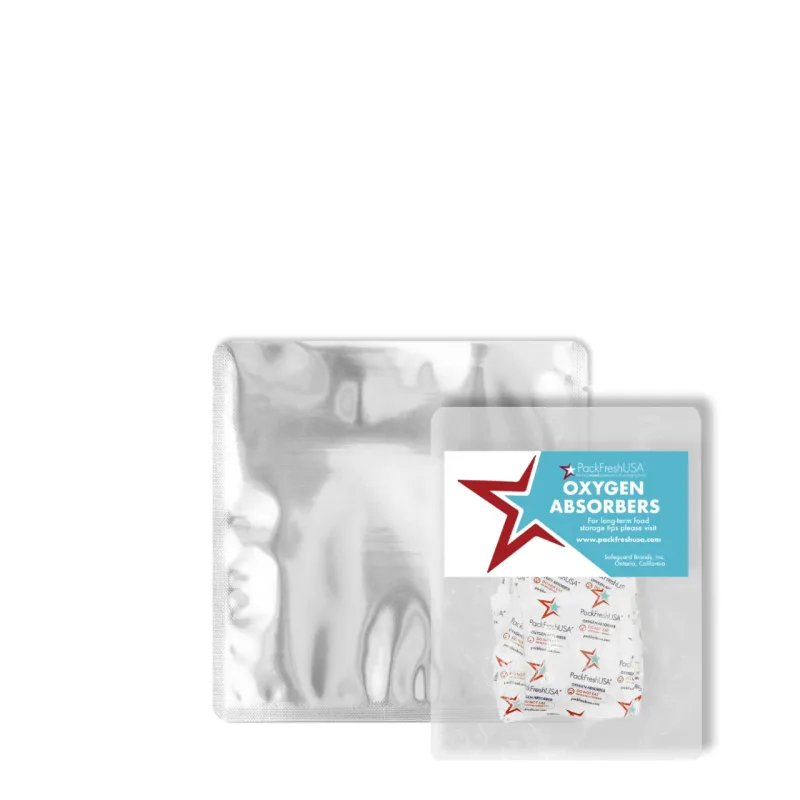
Sold by Sublime Pantry: Starter Set — 50 Bags, 50 Absorbers, Sealer. Sublime Pantry has no affiliate relationships, sponsorships, or paid placements as of publication. We sell packaging; where a product we sell appears, it is labeled.
Common questions
Does chewy always mean the batch is not dry?
It means moisture is the first thing to rule out, and the published dryness checks are the way to rule it in or out. Harvest Right's break test looks for a center that is moist, soft, cold, or darker than the surrounding food [4], and University of Minnesota Extension describes the same check as cutting each piece in half and inspecting for a dark spot [5]. Utah State Extension separately notes that correctly dried fruit “may be flexible, but not sticky” [3], so flexibility on its own is not the finding; the center is.
Can I put the trays back in and run more dry time?
Six extension services publish a re-dry permission for dried food that has taken on moisture: return it to the dryer and repackage [15][16][17][18][19][20]. All six gate that permission on the absence of mold [15][18][19]. Two limits apply here. That permission is written about condensation and moisture pickup in dehydrated food, not about a freeze-dried batch that never finished, and it says nothing about how the food was handled while it sat out.
How do I check dryness by weight?
Stay Fresh publishes the method: weigh each tray at the moment the cycle ends, run more dry time, and weigh again. “If the weight remains consistent, this indicates that the food is adequately dry” [6]. Its worked example is a tray of oranges at 249 g that dropped to 242 g on the second weighing, a 7 g loss that meant drying was not complete [6]. Harvest Right publishes no weight method on the pages checked; it publishes the break test and a moisture meter [4].
Is thicker food the reason, or was the batch too heavy?
Both are documented, and no source ranks them. On thickness, Utah State gives a general 1/4 to 1/2 inch piece guide [1], Harvest Right says pieces should be no thicker than the tray height and uses about three-quarters of tray height as a loading guide [8][7], and Arizona Extension says food should not sit higher than the tray lip [9]. On batch weight, the published capacities themselves disagree: Harvest Right's current FAQ lists 6–10 lb small, 10–15 lb medium, 18–27 lb large, 40–50 lb extra-large [10], while Utah State's 2019 figures are materially lower at 4–7, 7–10 and 12–16 lb [3], and Blue Alpine lists roughly 8–16 lb medium and 14–24 lb large [11].
The food was crisp when it came out and chewy a week later. Is that the same problem?
That is moisture regain rather than an unfinished cycle, and it is documented separately. Virginia Tech's small-scale freeze dryer study found water activity rose after 24 hours of storage for every commodity except apples, and that glass containers were less variable than plastic bags, except for onions [30]. Harvest Right states that food not placed in an airtight container “will begin to reabsorb moisture from the air and spoil” [32], and lists delayed sealing and incorrect oxygen absorber sizing among the causes of shortened shelf life [31].
Sources
- Can I Freeze-Dry That? A Practical Guide to Safe and Effective Freeze-Drying (January 2026) — Utah State University Extension primary · accessed 2026-09-06
- Ask an Expert — Freeze-Drying Food at Home: Tips for Safe, Successful Results — Utah State University Extension primary · accessed 2026-09-06
- Buying a Home Freeze-Dryer: What to Know Before You Go — Utah State University Extension primary · accessed 2026-09-06
- How Do I Know When My Freeze-Dried Food Is Completely Dry? — Harvest Right primary · accessed 2026-09-06
- Preserving food at home: Freeze-drying — University of Minnesota Extension primary · accessed 2026-09-06
- Master Freeze Drying: Check Doneness by Weight Change — Stay Fresh primary · accessed 2026-09-06
- How to Freeze Dry Like a Pro: 25 Tips for Better Results — Harvest Right primary · accessed 2026-09-06
- What's the best way to prepare food for freeze drying? — Harvest Right primary · accessed 2026-09-06
- Preparing and Storing Your Freeze Dried Products for Best Use (az2097b, February 2025) — University of Arizona Cooperative Extension primary · accessed 2026-09-06
- Harvest Right Home Freeze Dryers — FAQs — Harvest Right primary · accessed 2026-09-06
- Blue Alpine FAQs — Blue Alpine primary · accessed 2026-09-06
- What Foods Can You Freeze Dry? A Complete Guide — Harvest Right primary · accessed 2026-09-06
- Blueberries and Other Foods With Skins (staff post, 2024-11-22) — Blue Alpine official support forum primary · accessed 2026-09-06
- Freeze Drying For Home Use — UC Agriculture and Natural Resources / UC Master Food Preserver Program primary · accessed 2026-09-06
- Packaging and Storing Dried Foods — National Center for Home Food Preservation, University of Georgia primary · accessed 2026-09-06
- Drying Vegetables — Clemson University Home & Garden Information Center primary · accessed 2026-09-06
- Drying Fruits — Fact Sheet No. 9.309 (rev. 6/2012) — Colorado State University Extension primary · accessed 2026-09-06
- Conditioning Dried Foods (AnswerLine) — Iowa State University Extension and Outreach primary · accessed 2026-09-06
- Drying Fruits and Vegetables (PNW 397, 2nd ed.) — Pacific Northwest Extension (Washington State University / Oregon State University / University of Idaho) primary · accessed 2026-09-06
- Using Dehydration to Preserve Fruits, Vegetables, and Meats (348-597) — Virginia Cooperative Extension / Virginia Tech primary · accessed 2026-09-06
- Safety of Stored Foods — Clemson University Home & Garden Information Center primary · accessed 2026-09-06
- Leftovers and Food Safety — USDA Food Safety and Inspection Service primary · accessed 2026-09-06
- How to Rehydrate Freeze Dried Food — Tips and Techniques — Harvest Right primary · accessed 2026-09-06
- Jerky (drying recipes) — National Center for Home Food Preservation, University of Georgia primary · accessed 2026-09-06
- Jerky Making: Producing a Traditional Food With Modern Processes (reviewed May 2022) — North Dakota State University Extension primary · accessed 2026-09-06
- Jerky and Food Safety — USDA Food Safety and Inspection Service primary · accessed 2026-09-06
- Available Moisture in Foods: What Is It Anyway? (April 30, 2018) — Clemson University Home & Garden Information Center primary · accessed 2026-09-06
- Food Code 2022 — U.S. Food and Drug Administration primary · accessed 2026-09-06
- Freeze-drying Food Preservation (FS-160-W, May 2025) — Purdue University Extension primary · accessed 2026-09-06
- Factors that Impact Small-Scale Freeze Dryer Effectiveness (FST-506NP, May 19, 2025) — Virginia Cooperative Extension / Virginia Tech primary · accessed 2026-09-06
- How Long Does Freeze Dried Food Last? Shelf Life Guide — Harvest Right primary · accessed 2026-09-06
- How to Store Freeze Dried Food — Harvest Right primary · accessed 2026-09-06
- Preserving by Home Freeze Drying (AnswerLine, June 13, 2023) — Iowa State University Extension and Outreach primary · accessed 2026-09-06
- Food Storage for Emergencies (Food Storage Booklet, FN/preservation/2013-01pr) — Utah State University Extension primary · accessed 2026-09-06