

The short version: The machine treats all three groups the same way, freezing water and sublimating it, so the differences live in what you do before loading and after opening. Fruit is a cutting-and-browning problem, vegetables are a blanching problem, and meat is a fat-and-handling problem, and only meat carries a cooking step that the published guidance argues about. None of the three is made safe by the process itself: freeze drying is a preservation process, not a food-safety process [6].
Food behavior
Freeze-drying fruit, vegetables, and meat: how the process differs.
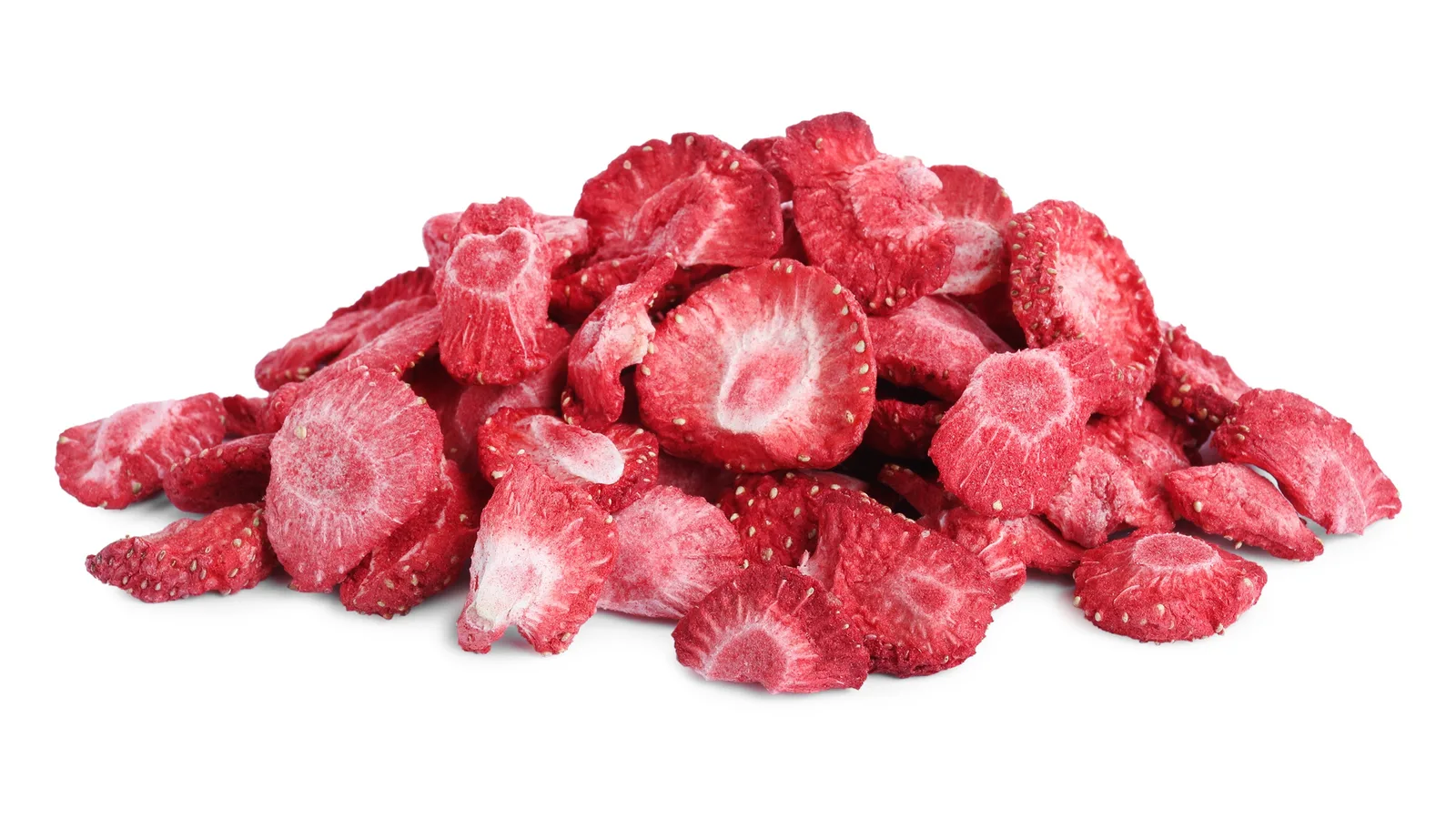
Food safety note: This article is educational, not professional food-safety, legal, or medical advice. Freeze-drying does not kill pathogens, and cottage food rules vary by state. Confirm requirements with your state or local food authority before selling anything.
The six criteria, side by side
Every figure below is published by the source cited, not measured by us. Cycle times are conditional on machine size, load weight, piece thickness, and starting temperature, and no source controls for those variables.
| Fruit | Vegetables and starches | Meat | |
|---|---|---|---|
| Prep | Uniform pieces, ¼–½ in for general drying guidance [3]; ¾ in banana chunks and ½–¾ in watermelon cubes per Blue Alpine [19]. Acid dip for light-colored fruit: 1 tsp ascorbic acid per gallon water [4]; apples, bananas, pears named [5]. Skins pierced or cut [12][21]. | Blanch or steam to inactivate enzymes [6]; most vegetables need it [5]. Potatoes blanched or cooked first; raw potatoes darken [24]. Beans cooked or soaked [1]. Herbs are the exception; no blanching guidance names them [7]. | Trim visible fat and bone; cut no thicker than ¾ in; single layer within the tray lip [9]. High-fat cuts such as bacon: cook first and blot the grease [9]. The cooking step is disputed; see the safety line. |
| Cycle behavior | 13–35 h general manufacturer range [11]. Blue Alpine: bananas 16 h; a generic fruit profile 24 h; watermelon 48–72 h, the longest published fruit figure [19]. Harvest Right: “Pineapple and watermelon can take longer” [11]. Utah State: fresh pineapple 48 to 52 hours [3]. | Harvest Right tested times via a retailer: potatoes 9 h freeze plus 7 h dry, 30–32 h total, 125 °F shelf [22]. Sugar prolongs cycles: dense and high-sugar foods may take 48 to 52 hours [6][3]. | No extension or manufacturer figure for meat alone; the general 13–35 h band covers “meats, meals, dairy” [11]. Secondary figures: sliced beef 22–26 h, ground beef 26–30 h [23]. Utah State: thick foods such as meat or casseroles can take more than two days [1]. |
| Fat and sugar | Sugar is the live variable. High-sugar foods run longer [3][6]; Utah State describes finished high-sugar fruit as “flexible, but not sticky” [3]. Fat matters only at the avocado end, under general high-fat caution [9], with a peer-reviewed counterpoint on fatty acid retention [34]. | Low fat, low sugar, and the group the published guidance argues about least. Iowa State places baked goods, high-fat foods, and high-sugar foods together among those that “do not freeze dry successfully” [7]. | Fat is the governing variable. “Freeze drying removes water, but oil remains” [13]. Utah State: high fat content prevents adequate drying, increasing the risk of rancidity and pathogen survival [1]. Arizona: mixed dishes freeze dry well if they are not overly greasy [9]. |
| Rehydration | Soak in a bowl of water or spritz [14]; produce may use room-temperature or warm water [15]. Lab measurement on a pilot unit: freeze-dried strawberry slices reached 64.90% rehydration capacity against 53.11% for hot-air drying [33]. | Warm water, or straight into soups and stews with extra liquid; for potatoes, 10–15 minutes [24]. Herbs, onions, and bell peppers need no rehydration at all and go directly into food [7]. | No numeric ratio from any primary source. Harvest Right instructs that raw meat is never rehydrated on the counter, while produce may be [15]. |
| Storage range with conditions | Published as one envelope for all three, not by group. Harvest Right: up to 25 years or longer under ideal conditions, given mylar plus an oxygen absorber, cool, low humidity, minimal light, below 85 °F [16][17]. Blue Alpine: 25+ years in a high-quality mylar bag [18]. Utah State: 10–15 years, sometimes 25, conditioned on airtight moisture-proof packaging [1]; separately, it states that “no real data exists on the shelf-life of home freeze-dried products” [3]. UC ANR does not recommend consuming home freeze-dried product beyond 5–10 years [6]; Iowa State: “There is no verification that food will last 25 years at this point” [7]. Fat shortens it in every framing [1][17]. | Published as one envelope for all three, not by group. Harvest Right: up to 25 years or longer under ideal conditions, given mylar plus an oxygen absorber, cool, low humidity, minimal light, below 85 °F [16][17]. Blue Alpine: 25+ years in a high-quality mylar bag [18]. Utah State: 10–15 years, sometimes 25, conditioned on airtight moisture-proof packaging [1]; separately, it states that “no real data exists on the shelf-life of home freeze-dried products” [3]. UC ANR does not recommend consuming home freeze-dried product beyond 5–10 years [6]; Iowa State: “There is no verification that food will last 25 years at this point” [7]. Fat shortens it in every framing [1][17]. | Published as one envelope for all three, not by group. Harvest Right: up to 25 years or longer under ideal conditions, given mylar plus an oxygen absorber, cool, low humidity, minimal light, below 85 °F [16][17]. Blue Alpine: 25+ years in a high-quality mylar bag [18]. Utah State: 10–15 years, sometimes 25, conditioned on airtight moisture-proof packaging [1]; separately, it states that “no real data exists on the shelf-life of home freeze-dried products” [3]. UC ANR does not recommend consuming home freeze-dried product beyond 5–10 years [6]; Iowa State: “There is no verification that food will last 25 years at this point” [7]. Fat shortens it in every framing [1][17]. |
| Safety line | Enzymatic and cosmetic. Pretreatment addresses browning, not pathogens [4][5]. | Blanching addresses enzymes, not pathogens [6]. Bacteria remain “viable, but dormant” [7]. | The determination sits on handling history and a cooking step. Sources disagree about where that step goes [1][2][4][12]. |
Scrolls sideways.
Fruit
- Prep
- Uniform pieces, ¼–½ in for general drying guidance [3]; ¾ in banana chunks and ½–¾ in watermelon cubes per Blue Alpine [19]. Acid dip for light-colored fruit: 1 tsp ascorbic acid per gallon water [4]; apples, bananas, pears named [5]. Skins pierced or cut [12][21].
- Cycle behavior
- 13–35 h general manufacturer range [11]. Blue Alpine: bananas 16 h; a generic fruit profile 24 h; watermelon 48–72 h, the longest published fruit figure [19]. Harvest Right: “Pineapple and watermelon can take longer” [11]. Utah State: fresh pineapple 48 to 52 hours [3].
- Fat and sugar
- Sugar is the live variable. High-sugar foods run longer [3][6]; Utah State describes finished high-sugar fruit as “flexible, but not sticky” [3]. Fat matters only at the avocado end, under general high-fat caution [9], with a peer-reviewed counterpoint on fatty acid retention [34].
- Rehydration
- Soak in a bowl of water or spritz [14]; produce may use room-temperature or warm water [15]. Lab measurement on a pilot unit: freeze-dried strawberry slices reached 64.90% rehydration capacity against 53.11% for hot-air drying [33].
- Storage range with conditions
- Published as one envelope for all three, not by group. Harvest Right: up to 25 years or longer under ideal conditions, given mylar plus an oxygen absorber, cool, low humidity, minimal light, below 85 °F [16][17]. Blue Alpine: 25+ years in a high-quality mylar bag [18]. Utah State: 10–15 years, sometimes 25, conditioned on airtight moisture-proof packaging [1]; separately, it states that “no real data exists on the shelf-life of home freeze-dried products” [3]. UC ANR does not recommend consuming home freeze-dried product beyond 5–10 years [6]; Iowa State: “There is no verification that food will last 25 years at this point” [7]. Fat shortens it in every framing [1][17].
- Safety line
- Enzymatic and cosmetic. Pretreatment addresses browning, not pathogens [4][5].
Vegetables and starches
- Prep
- Blanch or steam to inactivate enzymes [6]; most vegetables need it [5]. Potatoes blanched or cooked first; raw potatoes darken [24]. Beans cooked or soaked [1]. Herbs are the exception; no blanching guidance names them [7].
- Cycle behavior
- Harvest Right tested times via a retailer: potatoes 9 h freeze plus 7 h dry, 30–32 h total, 125 °F shelf [22]. Sugar prolongs cycles: dense and high-sugar foods may take 48 to 52 hours [6][3].
- Fat and sugar
- Low fat, low sugar, and the group the published guidance argues about least. Iowa State places baked goods, high-fat foods, and high-sugar foods together among those that “do not freeze dry successfully” [7].
- Rehydration
- Warm water, or straight into soups and stews with extra liquid; for potatoes, 10–15 minutes [24]. Herbs, onions, and bell peppers need no rehydration at all and go directly into food [7].
- Storage range with conditions
- Published as one envelope for all three, not by group. Harvest Right: up to 25 years or longer under ideal conditions, given mylar plus an oxygen absorber, cool, low humidity, minimal light, below 85 °F [16][17]. Blue Alpine: 25+ years in a high-quality mylar bag [18]. Utah State: 10–15 years, sometimes 25, conditioned on airtight moisture-proof packaging [1]; separately, it states that “no real data exists on the shelf-life of home freeze-dried products” [3]. UC ANR does not recommend consuming home freeze-dried product beyond 5–10 years [6]; Iowa State: “There is no verification that food will last 25 years at this point” [7]. Fat shortens it in every framing [1][17].
- Safety line
- Blanching addresses enzymes, not pathogens [6]. Bacteria remain “viable, but dormant” [7].
Meat
- Prep
- Trim visible fat and bone; cut no thicker than ¾ in; single layer within the tray lip [9]. High-fat cuts such as bacon: cook first and blot the grease [9]. The cooking step is disputed; see the safety line.
- Cycle behavior
- No extension or manufacturer figure for meat alone; the general 13–35 h band covers “meats, meals, dairy” [11]. Secondary figures: sliced beef 22–26 h, ground beef 26–30 h [23]. Utah State: thick foods such as meat or casseroles can take more than two days [1].
- Fat and sugar
- Fat is the governing variable. “Freeze drying removes water, but oil remains” [13]. Utah State: high fat content prevents adequate drying, increasing the risk of rancidity and pathogen survival [1]. Arizona: mixed dishes freeze dry well if they are not overly greasy [9].
- Rehydration
- No numeric ratio from any primary source. Harvest Right instructs that raw meat is never rehydrated on the counter, while produce may be [15].
- Storage range with conditions
- Published as one envelope for all three, not by group. Harvest Right: up to 25 years or longer under ideal conditions, given mylar plus an oxygen absorber, cool, low humidity, minimal light, below 85 °F [16][17]. Blue Alpine: 25+ years in a high-quality mylar bag [18]. Utah State: 10–15 years, sometimes 25, conditioned on airtight moisture-proof packaging [1]; separately, it states that “no real data exists on the shelf-life of home freeze-dried products” [3]. UC ANR does not recommend consuming home freeze-dried product beyond 5–10 years [6]; Iowa State: “There is no verification that food will last 25 years at this point” [7]. Fat shortens it in every framing [1][17].
- Safety line
- The determination sits on handling history and a cooking step. Sources disagree about where that step goes [1][2][4][12].
How fruit, vegetables and meat differ, criterion by criterion
Prep
Arizona Extension gives the tightest published dimension in the category, and it is for meat: trim visible fat and bone, cut no thicker than ¾ inch, and keep food below the lip of the tray [9]. For produce, the numbers are looser: ¼ to ½ inch as general guidance [3], with the one manufacturer that prints per-food geometry specifying ¾-inch banana chunks and ½–¾-inch watermelon cubes [19].
The group-level difference is what the pretreatment is for. Vegetables get heat: UC ANR instructs blanching or steaming “to inactivate enzymes, preserve color, flavor, and nutrients” [6], and the University of Maine says most vegetables need it [5]. Fruit gets acid instead: one teaspoon of ascorbic acid to one gallon of cool water for produce that cannot be blanched [4]. Meat gets neither; it gets fat and bone removed [9].
Skins are a fruit-only problem, and the two tiers give different reasons for the same action. Blue Alpine's support forum states plainly that “any food with a skin will have a harder time freeze drying. Blueberries are especially difficult,” and ranks purée above halving above piercing [21]. Arizona Extension prescribes puncturing cranberries and blueberries to prevent them from bursting [9]. Neither addresses the other's mechanism.
Cycle behavior
Watermelon is the outlier: 48 to 72 hours at 500–800 mTorr and 85–95 °F [19], roughly two to five times the general 13–35 hour band Harvest Right publishes for meats, meals, and dairy [11]. Utah State's comparable figure for a dense, high-sugar fruit is 48 to 52 hours for fresh pineapple [3].
Water content drives length in every source [4]. Sugar extends it: dense and high-sugar foods are the ones both Utah State and UC ANR attach the 48-to-52-hour figure to [3][6]. Fat is described as slowing the process but is not tied to a published cycle-time figure by any source; the instruction is to remove it rather than to plan around it [1][9].
Starches sit in the middle, and the only tested-time figure found for one is secondhand: potatoes at 9 hours freeze plus 7 hours dry, 30–32 hours total, on a 125 °F shelf [22]. For meat there is no separate primary figure at all, only the 13–35 hour band that lumps it with meals and dairy [11], and Utah State's note that thick foods such as meat or casseroles can take more than two days [1].
Fat and sugar
“Freeze drying removes water, but oil remains” [13]. That single manufacturer sentence explains most of what separates meat from the other two groups, and Utah State states the consequence: “High fat content prevents adequate drying, increasing the risk of rancidity and pathogen survival” [1]. Harvest Right's storage guidance carries the same finding in gentler terms: foods containing higher amounts of fat generally have shorter storage lives [17].
The boundary is qualitative everywhere. No source at any tier publishes a fat-percentage ceiling for any food, so “trim it” is the whole of the published instruction. Blue Alpine's version of the rule names very oil-based foods such as peanut butter as an exception rather than a threshold [18].
Sugar is the fruit-side variable, and the published framings differ in temperature. Utah State describes high-sugar foods as finishing “flexible, but not sticky” [3]: permissive, and about fruit. Harvest Right's language about the honey and syrup end is that high-sugar foods become a sticky, difficult-to-handle mess [13]. Neither source draws the line between those two tiers of sugar itself.
Fruit does have a fat case: avocado. General high-fat caution applies [9], and the one peer-reviewed measurement found reports that freeze-drying “did not statistically affect the fatty acids profile, except the linoleic acid,” attributing further degradation more to storage conditions than to the drying process [34].
Rehydration
The one measured comparison in the pack is fruit: freeze-dried strawberry slices reached 64.90% rehydration capacity against 53.11% for hot-air-dried slices, at 9.49% final moisture, on a laboratory unit running 49 hours at under 40 °C and 0.055 mbar, not a consumer machine [33].
Practice differs by group more than mechanism does. Fruit is soaked or spritzed [14]. Vegetables go into warm water or straight into soups and stews with extra liquid; potatoes take 10 to 15 minutes [24]. Herbs, onions, and bell peppers are not rehydrated at all; they go directly into food [7].
Meat is where the published record stops. No primary source publishes a rehydration ratio for meat. What Harvest Right does publish is a handling rule that splits the groups: raw meat is never rehydrated on the counter, while fruits and vegetables may use room-temperature or warm water [15]. Virginia Tech goes further for produce, instructing that dried fruits and vegetables be reconstituted in the refrigerator to prevent growth of microorganisms [35]; Clemson sets the same requirement only past a two-hour soak [30].
Storage range, and the conditions attached to it
Measured water activity in freeze-dried food, where anyone has measured it, runs low: 0.02 to 0.3 across products stored one to two years and fifty years in one thesis dataset [32], and Virginia Cooperative Extension's small-scale freeze dryer study reports that “the water activity did not ever rise above 0.6” [31]. That same study found larger 14 mm dice reached higher water activity than 7 mm dice, that water activity rose after 24 hours of storage for every commodity except apples, and that glass containers were less variable than plastic bags [31]. The instrument and dryer models are not named in the publication.
The shelf-life figures themselves are not group-specific, and they are contested. Harvest Right publishes up to 25 years or longer under ideal conditions, tied to mylar plus an oxygen absorber, cool temperatures, low humidity, minimal light, and storage below 85 °F [16][17]; Blue Alpine publishes 25+ years tied to a high-quality mylar bag [18]. Utah State publishes 10–15 years, sometimes up to 25, conditioned on airtight moisture-proof packaging [1], while a separate Utah State publication states that “no real data exists on the shelf-life of home freeze-dried products” and anchors instead to an 8-to-10-year conservative estimate for commercially produced metal-mylar product [3]. UC ANR states the 25-year claim “has not been corroborated by university studies for home freeze dryers” and does not recommend consuming home freeze-dried product beyond 5–10 years [6]. Iowa State: “There is no verification that food will last 25 years at this point” [7]. We publish all of these rather than picking one, and we make no shelf-life guarantee of our own.
Harvest Right names four causes of shortened shelf life: food not completely dry before packaging, delayed sealing after the cycle, incorrect oxygen absorber sizing, and inappropriate storage conditions [16]. Three of those four are packaging decisions made in the ten minutes after the door opens. Our Starter Set, 50 mylar bags, 50 matched absorbers, and the sealer that closes them, covers that window. Sold by Sublime Pantry.
The dryness endpoint is the same test for all three groups, and it is a center test, not a surface test: “The outside of a piece of food can feel completely dry even when moisture remains in the center” [20]. Harvest Right's instruction is to break open several of the largest or thickest pieces from different trays and check for moisture, cold spots, or soft areas [20]; the University of Minnesota's version is to cut each piece in half and look for dark spots in the middle [4].
The safety line
Start with what went into the dryer, because that is what determines what comes out. “Freeze-drying does not kill bacteria. Instead, it preserves microorganisms in a dormant state,” per Jose Brandao of Utah State University Extension [2]. Penn State: “The freeze-drying process does not kill harmful bacteria that can cause foodborne illness” [8]. The University of Maine says the same [5], UC ANR calls freeze drying a preservation process rather than a food safety process [6], the University of Minnesota notes there is no heat treatment step in it [4], and Harvest Right's own page states that freeze drying does not kill pathogens [12]. The handling history of the food before it reached the tray is the safety determination: its source, its temperature history, whether it was ever cooked. Appearance after the cycle is not, and freeze-drying does not make unsafe food safe.
Dormancy is not the same as absence. FDA's growth-minimum tables put Salmonella at a minimum water activity of 0.94, Listeria monocytogenes at 0.92, and pathogenic E. coli at 0.95 [26][27]. A properly dried product sits far below all three, which is why nothing grows in the bag, and why nothing in the bag was killed either. Reintroduce water and the food re-enters the range those organisms grow in. Iowa State's phrasing for the dried product is that bacteria remain “viable, but dormant” [7].
That is why meat carries a cooking step and the other two groups do not, and why the published guidance argues about where the step goes. Utah State's January 2026 guide lists raw meat, poultry, seafood, eggs, and unpasteurized dairy among foods not to freeze-dry, each with a required cooking temperature [1]. Its May 2026 Ask an Expert states such foods must be fully cooked “either before freeze-drying or after rehydration” [2]. The University of Minnesota states meat, poultry, and seafood can be freeze-dried raw or cooked [4]; Harvest Right says the same [12]. For dehydrated meat, which is a different process with a deeper literature, USDA FSIS requires steaming or roasting to 160 °F, and poultry to 165 °F, before drying, and notes that “after drying, bacteria become much more heat resistant” [25]. We describe these positions; we do not advise which to follow, and we have not tested any of them.
Recovery advice comes after all of that, not before it, and it is not ours. Six extension services permit re-drying and repackaging of dried food that has taken up moisture, uniformly gated on the absence of mold: the National Center for Home Food Preservation states that foods affected by moisture but not spoiled “should be used immediately or redried and repackaged,” and that “moldy foods should be discarded” [28]; Clemson publishes the same construction for vegetables [30]; Iowa State instructs returning food to the dryer if condensation appears during conditioning, and discarding at any sign of mold [29]. Those instructions are written about condensation and moisture pickup. No source we reviewed extends them to a failed oxygen absorber, a jar that lost its seal, or food held above a stated temperature or humidity, so we do not extend them either, and we publish no protocol of our own for those cases. Re-drying addresses moisture; it does not address handling history.
One ordering we will not assert: no source we reviewed ranks rancidity against microbial growth as the limiting failure mode for high-fat dried food. Utah State names rancidity as a risk for high-fat foods [1]; Clemson, NCHFP, FSIS, and Utah State frame storage limits microbially [28][30][25][3]. Nobody publishes an order between them, so none is given here.
What we could not source
- Fresh-to-dried yield for any of the three groups. Of the extension publications reviewed on 2026-09-06: Utah State (January 2026 [1], May 2026 [2], and [3]), University of Minnesota [4], University of Maine (April 2024) [5], UC ANR [6], Iowa State (June 2023) [7], Penn State [8], University of Arizona (February 2025) [9], and Clemson [10]; none publishes a yield percentage for any fruit, vegetable, or meat.
- A fat-percentage threshold. No source at any tier gives a numeric fat ceiling for any food. The lean preference is qualitative in every publication reviewed [1][13][17].
- A rehydration ratio for meat. No primary source publishes one. The figures that exist for other foods are secondary [24].
- A residual-moisture target. Every published figure is framed as percent removed: 97%, roughly 90% plus 1–2% desorption, up to 98% [6][4][5], never as percent remaining.
- Any ranking of the three groups. Not by ease, not by cycle length, not by shelf life. No source publishes one, so none appears above.
- Mushrooms as a freeze-drying subject. Of the extension publications reviewed on 2026-09-06 and listed above, none addresses freeze-drying mushrooms; the mushroom guidance those services publish is for dehydrating and freezing.
- Blueberry-specific cycle times from any manufacturer. The nearest published analog is grapes at 20 hours [19].
- An instrument for the water activity figures. None of the three sources reporting freeze-dried water activity names the meter used [1][31][32].
Next
- Freeze-drying eggs — a fourth group with its own risk class.
- Mushrooms, herbs, and the small stuff — loads that behave unlike any of the three.
- The complete batch workflow — the run all three groups pass through.
Tools mentioned in this guide
- Sold by Sublime Pantry
Starter Set — 50 Bags, 50 Absorbers, Sealer
Everything needed to seal your first fifty bags: 50 bags, 50 matched absorbers, and the sealer that closes them.
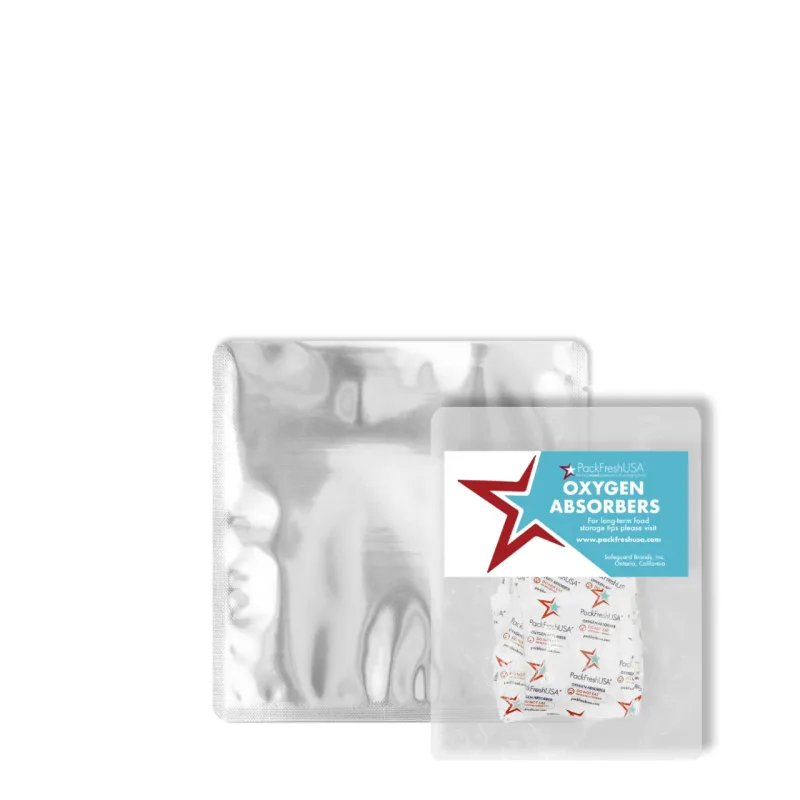
Sold by Sublime Pantry: Starter Set — 50 Bags, 50 Absorbers, Sealer. Sublime Pantry has no affiliate relationships, sponsorships, or paid placements as of publication. We sell packaging; where a product we sell appears, it is labeled.
Common questions
Do fruit, vegetables, and meat need different machine settings?
Published settings vary by food, but the only manufacturer that prints a per-food settings table is Blue Alpine, for example 16 hours on a delicate profile at 900–1100 mTorr and 105–110 °F for ¾-inch banana chunks, against 48–72 hours at 500–800 mTorr and 85–95 °F for ½–¾-inch watermelon cubes [19]. Harvest Right publishes one general figure covering meats, meals, and dairy: 13 to 35 hours [11]. Treat any single figure as conditional on machine size, load weight, piece thickness, and starting temperature; none of the sources controls for those.
Does meat have to be cooked before it goes in?
The published guidance splits, and it splits inside one institution. Utah State's January 2026 guide places raw meat, poultry, seafood, and eggs among foods not to freeze-dry, each with a required cooking temperature [1], while its May 2026 Ask an Expert says such foods must be fully cooked “either before freeze-drying or after rehydration” [2]. The University of Minnesota states meat, poultry, and seafood can be freeze-dried raw or cooked [4], and Harvest Right says the same on a page that also states freeze drying does not kill pathogens [12]. What every one of those sources agrees on is that a cooking step exists somewhere: before the tray or before the plate.
Why do vegetables get blanched when fruit does not?
Blanching is aimed at enzymes, not pathogens. UC ANR instructs blanching or steaming to inactivate enzymes and preserve color, flavor, and nutrients [6]; the University of Maine says most vegetables need blanching to prevent changes to color, texture, and flavor [5]. Light-colored fruit gets an acid dip instead: one teaspoon ascorbic acid per gallon of cool water, per the University of Minnesota [4], with apples, bananas, and pears named as candidates [5]. Neither step is a kill step.
Which group has the shortest storage life?
No source publishes a ranking by group, so there is none to give. What is published is a mechanism: fat is not removed by sublimation. “Freeze drying removes water, but oil remains” [13], and Harvest Right states foods containing higher amounts of fat generally have shorter storage lives [17]. Utah State attaches the same caution to high-fat foods, adding that high fat content prevents adequate drying [1]. That points at fatty meat and at high-fat produce like avocado, but the boundary is qualitative: no source at any tier publishes a fat-percentage ceiling for any food.
Can under-dried or moisture-affected food be re-dried?
In the dried-food literature, yes, conditionally, and the condition is uniform. The National Center for Home Food Preservation states foods affected by moisture but not spoiled should be used immediately or redried and repackaged, and that moldy foods should be discarded [28]. Clemson [30] and Iowa State [29] publish the same permission and the same mold exclusion. That permission is written about condensation and moisture pickup; no source we reviewed extends it to a failed oxygen absorber, a jar that lost its seal, or food held above a stated temperature. Sublime Pantry does not publish a recovery protocol of its own, and re-drying does not address whatever was on the food before it went in.
Sources
- Can I Freeze-Dry That? A Practical Guide to Safe and Effective Freeze-Drying (January 2026) — Utah State University Extension primary · accessed 2026-09-06
- Ask an Expert — Freeze-Drying Food at Home: Tips for Safe, Successful Results (May 15, 2026) — Utah State University Extension primary · accessed 2026-09-06
- Buying a Home Freeze-Dryer: What to Know Before You Go — Utah State University Extension primary · accessed 2026-09-06
- Preserving food at home: Freeze-drying — University of Minnesota Extension primary · accessed 2026-09-06
- Tips for Freeze Drying at Home (April 25, 2024) — University of Maine Cooperative Extension primary · accessed 2026-09-06
- Freeze Drying For Home Use — UC Agriculture & Natural Resources / UC Master Food Preserver Program primary · accessed 2026-09-06
- Preserving by Home Freeze Drying (AnswerLine, June 13, 2023) — Iowa State University Extension and Outreach primary · accessed 2026-09-06
- Let's Preserve: Freeze-Drying — Penn State Extension primary · accessed 2026-09-06
- Preparing and Storing Your Freeze Dried Products for Best Use (az2097b, February 2025) — University of Arizona Cooperative Extension primary · accessed 2026-09-06
- Freeze Drying Foods — Clemson Cooperative Extension (HGIC) primary · accessed 2026-09-06
- Harvest Right Home Freeze Dryers — FAQs — Harvest Right primary · accessed 2026-09-06
- What's the best way to prepare food for freeze drying? — Harvest Right primary · accessed 2026-09-06
- What Foods Can You Freeze Dry? A Complete Guide — Harvest Right primary · accessed 2026-09-06
- Rehydrating Freeze Dried Fruits and Vegetables — Harvest Right primary · accessed 2026-09-06
- How to Rehydrate Freeze Dried Food — Tips and Techniques — Harvest Right primary · accessed 2026-09-06
- How Long Does Freeze Dried Food Last? Shelf Life Guide — Harvest Right primary · accessed 2026-09-06
- Storing Freeze Dried Food — Harvest Right primary · accessed 2026-09-06
- Blue Alpine FAQs — Blue Alpine primary · accessed 2026-09-06
- How Do You Freeze Dry Fruits, Berries, and Melons? — Blue Alpine primary · accessed 2026-09-06
- How Do I Know When My Freeze-Dried Food Is Completely Dry? — Harvest Right primary · accessed 2026-09-06
- Blueberries and Other Foods With Skins (staff post, November 22, 2024) — Blue Alpine official support forum primary · accessed 2026-09-06
- Harvest Right Freeze Drying Time Chart — Trimleaf (retailer, reproducing Harvest Right tested times) secondary · accessed 2026-09-06
- Freeze Drying Raw Meat: What You Need to Know — Trimleaf (retailer) secondary · accessed 2026-09-06
- Freeze Drying Potatoes: A Complete Guide — Montana Homestead Harvest secondary · accessed 2026-09-06
- Jerky and Food Safety — USDA Food Safety and Inspection Service primary · accessed 2026-09-06
- Appendix 4: Bacterial Pathogen Growth and Inactivation (Fish and Fishery Products Hazards and Controls Guidance) — U.S. Food and Drug Administration primary · accessed 2026-09-06
- Food — Chapter 3. Factors that Influence Microbial Growth (Table 3-2) — U.S. Food and Drug Administration primary · accessed 2026-09-06
- Packaging and Storing Dried Foods (content revised 2014, reviewed 2020) — National Center for Home Food Preservation, University of Georgia primary · accessed 2026-09-06
- Conditioning Dried Foods (AnswerLine, August 15, 2023; reviewed 6/2025) — Iowa State University Extension and Outreach primary · accessed 2026-09-06
- Drying Vegetables (June 10, 2024) — Clemson University Home & Garden Information Center primary · accessed 2026-09-06
- FST-506NP — Factors that Impact Small-Scale Freeze Dryer Effectiveness (May 19, 2025) — Virginia Cooperative Extension / Virginia Tech primary · accessed 2026-09-06
- Quality and Sensory Characteristics of Selected Freeze-Dried Foods After 50 Years Storage (MS thesis, 2024) — Brigham Young University, ScholarsArchive primary · accessed 2026-09-06
- Impact of Different Dehydration Methods on Drying Efficiency, Nutritional and Physico-Chemical Quality of Strawberries Slices (Processes 13(7):2065, 2025) — MDPI Processes primary · accessed 2026-09-06
- Effect of freeze-drying and production process on the chemical composition and fatty acids profile of avocado pulp (Rev. Chil. Nutr. 41(4):404-411, 2014) — Revista Chilena de Nutrición primary · accessed 2026-09-06
- Using Dehydration to Preserve Fruits, Vegetables, and Meats (348-597, January 28, 2025) — Virginia Cooperative Extension / Virginia Tech primary · accessed 2026-09-06