

The short version: Mushrooms go in raw, sliced about ¼ inch (6 mm) with small ones left whole, and come back with roughly ten minutes in warm water. That thickness, that time and that soak all trace to one secondary source, because no extension service has published freeze-drying guidance for mushrooms at all [16][5][6]. Herbs need no blanching and no rehydration: store the leaves whole, crush them at the point of use [8][2]. Everything small, herb leaves, mushroom trim, corn and peas, is a loading and liner problem more than a drying problem.
Foods
Mushrooms, herbs, and the small stuff.
Food safety note: This article is educational, not professional food-safety, legal, or medical advice. Freeze-drying does not kill pathogens, and cottage food rules vary by state. Confirm requirements with your state or local food authority before selling anything.
Mushrooms — prep, thickness, rehydration
The one published thickness figure for freeze-drying mushrooms is ¼ inch (about 6 mm) for large caps, with small mushrooms left whole, and it comes from a secondary source [16]. Oregon State publishes ~½ inch (13 mm) for mushrooms, but that figure is for dehydrating, a different process [5]. The manufacturer general rule is looser still: cut pieces no thicker than the tray height, with ¼–½ inch given as the working range for food generally [9][1].
Mushrooms are treated as a suitable food by manufacturers: Harvest Right groups them with crunchy vegetables to freeze dry and rehydrate [7], and Stay Fresh publishes a comparison of freeze drying against hot-air drying for mushroom preservation [14]. What does not exist is an extension counterpart. Oregon State and Penn State both publish mushroom preservation guidance, and both cover drying, freezing and canning only [5][6].
Raw is the default. Pre-sautéing is described as optional and “a longer process,” again from the secondary source [16]. No source publishes a browning rationale for mushrooms specifically, which is worth noting because the blanching instruction that dominates vegetable guidance (blanch or steam to inactivate enzymes and preserve color, flavor and nutrients) is written for vegetables as a class, never for mushrooms by name [4][3][13].
Cycle time: 15–20+ hours, secondary and uncorroborated [16]. No source publishes a fresh-to-dried yield figure for mushrooms.
Rehydration: warm water for about 10 minutes, then strain; or add the dried pieces straight into soups, stews and sauces [16]. No published water-to-mushroom ratio exists at any tier.
On the endpoint, the manufacturer instruction is a break test: “Break them open and check the center. There should be no moisture, cold spots, or areas that feel soft,” testing several of the largest or thickest pieces from different trays, because “the outside of a piece of food can feel completely dry even when moisture remains in the center” [12]. Minnesota's version is to cut each piece in half and inspect for a dark spot in the middle [13]. Utah State gives the endpoint qualitatively, as a “crisp” or “breakable” texture [17]. Stay Fresh publishes the only weight-based method found: weigh a tray at cycle end and again after extended drying, and “if the weight remains consistent, this indicates that the food is adequately dry” [15].
Storage life is contested and should be read that way. A secondary source attaches “20+ years” to mushrooms in mylar with an oxygen absorber, unverified [16]. Utah State's general figures are 10–15 years, sometimes up to 25, for commercial product and 5–10 years for home product [1]; its 2019 buying guide anchors to a conservative 8–10 year estimate for commercial metal-mylar pouches and states that no real data exists on the shelf life of home freeze-dried products [17]; Iowa State says there is no verification that food will last 25 years [2]. Separately, and unrelated to how long it keeps: freeze drying does not kill bacteria; it preserves microorganisms in a dormant state that reactivates when water is added back [1][2][3].
Herbs, and what sources actually say about volatiles
The single sourced instruction for herbs is a storage one: “Store herbs whole when possible and crush them shortly before use for stronger aroma and flavor” [8]. That is Harvest Right's wording, and it is published without a stated rationale. The same page names basil, parsley, cilantro, dill, mint, oregano, thyme, rosemary, sage and chives [8].
Two absences do the rest of the work here. Herbs are not blanched: the blanching guidance in every extension source is written for vegetables, and no source extends it to herbs [1][3][4]. And herbs are not rehydrated: “There is no need to rehydrate herbs, onions, or bell peppers as they can be added directly to foods” [2].
On volatile oils, the honest answer is that the comparison you have probably read does not exist in any citable form. No extension service publishes a comparison of volatile-oil or color retention between freeze drying and dehydrating for herbs. The claims in circulation are commercial and blog claims, and this article excludes them on tier. What extension sources do state about blanching's purpose (inactivating enzymes to preserve color, flavor and nutrients [4]) is a vegetable claim, not a measurement of aromatic compounds in herbs, and it should not be borrowed as one. No cycle time and no yield figure for herbs is published either.
Liners and small pieces
Liners are a handling tool in the published guidance, not a drying tool. Harvest Right: “Silicone mats or parchment paper can make cleanup easier and are especially helpful with liquids, sticky foods, or foods that may be difficult to remove” [10]. The mats themselves are 1 mm, dishwasher safe, and described as “Food comes right off” [11]. No manufacturer quantifies an effect of liners on cycle time, and no manufacturer publishes mesh-liner guidance for small pieces: both are absences, not endorsements [10][11].
Loading is where the guidance contradicts itself, and both halves are Harvest Right's. One page: “Pieces can touch, so you don't need to leave space between every piece” [10]. Another: “Place food in a single layer on each tray,” with the sole exception that “Corn, beans, and peas can be slightly layered; other veggies should be in a single layer” [9]. Minnesota sides with the single layer [13]. That contradiction is unresolved in the published record, so treat the single layer as the conservative reading and the slight layering as the exception its own source names.
Depth: about ¾ of the tray height is given as a general loading guide, with pieces cut no thicker than the tray height [10][9].
For small pieces the endpoint check matters more, not less, because the thickest piece is the one that lies to you. Test several of the largest or thickest pieces from different trays [12]. Once the batch passes, small pieces go into mylar with an oxygen absorber, and our Snack Bags 6×6 (50 six-by-six mylar bags at 4.3 mil, with 50 matched 100cc absorbers) cover that step. Sold by Sublime Pantry.
Wild-foraged, and what extension says
Two extension services publish the same warning in nearly the same words. Oregon State: “The toxins in poisonous varieties of mushrooms are not destroyed by drying or by cooking” [5]. Penn State: “Cooking or drying cannot destroy mushroom toxins” [6].
Both statements appear in dehydrating, freezing and canning material. Neither is published in a freeze-drying-specific document, and no extension service has published one that addresses wild mushrooms and a home freeze dryer. We searched for it and found nothing; the gap is recorded below rather than papered over by treating a dehydrating statement as freeze-drying guidance.
What the freeze-drying record does say lines up with the same direction of travel: the process removes water and does not destroy microorganisms, which survive dormant and reactivate on rehydration [1][2][3]. Nothing in the published record describes freeze drying as altering toxins, and nothing describes it as making an unsafe food safe. Identification, in every source that touches the subject, is the step that determines the outcome, and it happens before the dryer is involved at all.
Table: food, prep, thickness
| Food | Prep | Thickness / form | Source and tier |
|---|---|---|---|
| Mushrooms, large caps | Raw; sautéing optional and “a longer process” | ¼ in (~6 mm) slices | [16] secondary, uncorroborated |
| Mushrooms, small | Raw, left whole | Whole | [16] secondary |
| Mushrooms, for dehydrating (contrast, not freeze drying) | Per OSU dehydrating guidance | ~½ in (13 mm) | [5] extension, different process |
| Herbs (basil, parsley, cilantro, dill, mint, oregano, thyme, rosemary, sage, chives) | No blanching published; no rehydration needed | Whole leaves; crush at point of use | [8][2][1] |
| Corn, beans, peas | Cook or soak beans first: “improves texture after rehydration and helps prevent hard seed coats” | May be “slightly layered”; other vegetables single layer | [1][9] |
| Vegetables generally | Blanch or steam to inactivate enzymes and preserve color, flavor, nutrients | ¼–½ in (6–13 mm); no thicker than tray height | [4][3][13][1][9] |
| Liquids, sticky foods, hard-to-release pieces | Silicone mat or parchment liner | ~¾ tray height as a loading guide | [10][11] |
What we could not source
- No extension freeze-drying guidance for mushrooms exists. Oregon State and Penn State publish mushroom preservation pages covering drying, freezing and canning only [5][6].
- The wild-mushroom toxin warning has no freeze-drying-specific home. A search for freeze drying wild mushrooms toxins not destroyed safety warning returned the statement only in dehydrating, freezing and canning contexts [5][6].
- No extension comparison of volatile-oil or color retention in herbs, freeze drying vs dehydrating. Searches for an extension study returned only commercial and blog claims, excluded on tier.
- No fresh-to-dried yield percentage for mushrooms, herbs or any vegetable. No extension service publishes a yield figure for any food; the only two figures found anywhere in this research were for milk and strawberries, both non-extension.
- No mesh-liner guidance for small pieces, and no cycle-time effect of liners. Neither is published by any manufacturer [10][11].
- No published rehydration ratio for mushrooms, only the warm-water-for-ten-minutes method, secondary [16].
- No cycle time or yield for herbs at any tier, and no residual-moisture target for any food: every published moisture figure is framed as percent removed, never percent remaining.
- The National Center for Home Food Preservation publishes no home freeze-drying guidance at all. Its freezing and drying pages cover conventional processes; its freeze-drying educator page is subscriber-gated. The extension authority in this article defaults to Utah State, UC ANR, Minnesota, Iowa State, Oregon State and Penn State as a result.
Next
- How fruit, vegetables, and meat differ — the three main groups these sit beside.
- What freeze-drying does to candy — another load with its own handling.
- The complete batch workflow — the standard run to adapt.
Tools mentioned in this guide
- Sold by Sublime Pantry
Snack Bags 6×6 — 50 Pack with Absorbers
50 six-by-six mylar bags at 4.3 mil, with 50 matched 100cc oxygen absorbers. Single-serving and small-batch portions.
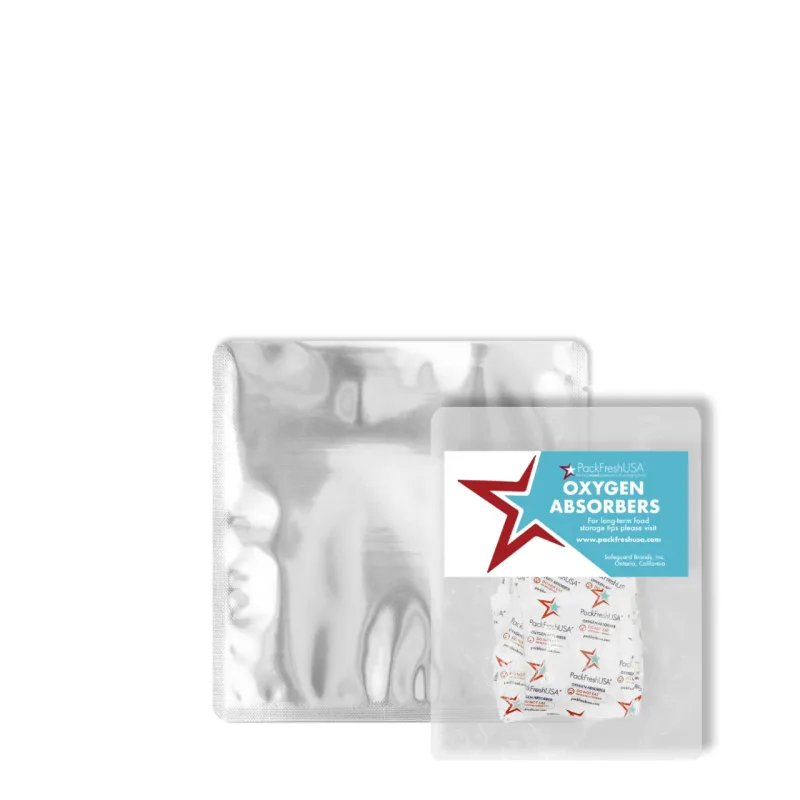
Sold by Sublime Pantry: Snack Bags 6×6 — 50 Pack with Absorbers. Sublime Pantry has no affiliate relationships, sponsorships, or paid placements as of publication. We sell packaging; where a product we sell appears, it is labeled.
Common questions
Why is this guide marked elevated risk?
Because the research behind it contains wild-mushroom safety material. Two extension services state that mushroom toxins are not destroyed by drying or cooking [5][6], and a guide that touches foraged mushrooms carries that consequence even though both statements were published in a dehydrating context rather than a freeze-drying one. Everything else here would sit at standard on its own: cultivated mushrooms, herbs, small pieces.
Do mushrooms need blanching or sautéing first?
No source requires either. Raw is the default, and pre-sautéing is described as optional and “a longer process” by a secondary source [16]. The blanching instruction that runs through extension guidance is written for vegetables as a class and is never applied to mushrooms by name [4][3][13].
How thick should mushroom slices be?
The only freeze-drying figure published is ¼ inch (about 6 mm) for large caps, with small mushrooms left whole, and it is secondary [16]. Oregon State's ~½ inch is for dehydrating [5]. The manufacturer general rule is ¼–½ inch and no thicker than the tray height [9][1].
Do freeze-dried herbs need rehydrating?
No. Iowa State: “There is no need to rehydrate herbs, onions, or bell peppers as they can be added directly to foods” [2]. Store the leaves whole and crush them shortly before use [8].
How long do freeze-dried mushrooms keep?
There is no mushroom-specific figure from any primary source. A secondary source claims 20+ years in mylar with an oxygen absorber, unverified [16]. Utah State's general figures are 10–15 years for commercial product and 5–10 for home product [1], its buying guide anchors to a conservative 8–10 years for commercial metal-mylar and states no real data exists for home product [17], and Iowa State says there is no verification of the 25-year claim [2].
Sources
- Can I Freeze-Dry That? A Practical Guide to Safe and Effective Freeze Drying — Utah State University Extension primary · accessed 2026-09-06
- Preserving by Home Freeze Drying (AnswerLine) — Iowa State University Extension and Outreach primary · accessed 2026-09-06
- Freeze Drying at Home — UC Master Food Preserver Program / UC ANR primary · accessed 2026-09-06
- Freeze Drying For Home Use (fact sheet, PDF) — UC ANR primary · accessed 2026-09-06
- Preserving Mushrooms — Oregon State University Extension Service primary · accessed 2026-09-06
- Preparing and Preserving Mushrooms — Penn State Extension primary · accessed 2026-09-06
- How to Freeze Dry and Re-hydrate Crunchy Vegetables — Harvest Right primary · accessed 2026-09-06
- How to Freeze Dry Your Garden Harvest — Harvest Right primary · accessed 2026-09-06
- What's the best way to prepare food for freeze drying? — Harvest Right primary · accessed 2026-09-06
- How to Freeze Dry Like a Pro: 25 Tips for Better Results — Harvest Right primary · accessed 2026-09-06
- Silicone Mats (product page) — Harvest Right primary · accessed 2026-09-06
- How Do I Know When My Freeze-Dried Food Is Completely Dry? — Harvest Right primary · accessed 2026-09-06
- Preserving food at home: Freeze-drying — University of Minnesota Extension primary · accessed 2026-09-06
- Freeze Drying vs. Hot Air Drying for Mushroom Preservation — Stay Fresh primary · accessed 2026-09-06
- Master Freeze Drying: Check Doneness by Weight Change — Stay Fresh primary · accessed 2026-09-06
- A Guide to Freeze Drying Mushrooms — Montana Homestead Harvest secondary · accessed 2026-09-06
- Buying a Home Freeze-Dryer: What to Know Before You Go (PDF, April 2019) — Utah State University Extension primary · accessed 2026-09-06